Research Areas

Doctoral Thesis
My doctoral research explores how two-color thermography can be used as a scalable sensing framework for metal additive manufacturing. Rather than relying on extensive instrumentation, this approach uses a single commercial camera to extract multiple process outputs of interest (i.e., melt pool temperature, cooling rate, thermal gradients, and geometric features), creating a path toward multi-output feedback control with minimal sensing inputs.
The broader goal is to reduce sensing complexity while still enabling meaningful process awareness and control in wire arc additive manufacturing (WAAM). By turning one imaging system into a rich source of thermal information, this work supports defect mitigation, improved mechanical performance, and more practical closed-loop implementation in industrial environments.
0. Preface
This thesis is motivated by the need for practical, in-situ monitoring methods in welding-based metal additive manufacturing. It frames thermal imaging not just as a measurement tool, but as a scalable input for process understanding and future closed-loop control.
1. Introduction to Wire Arc Additive Manufacturing
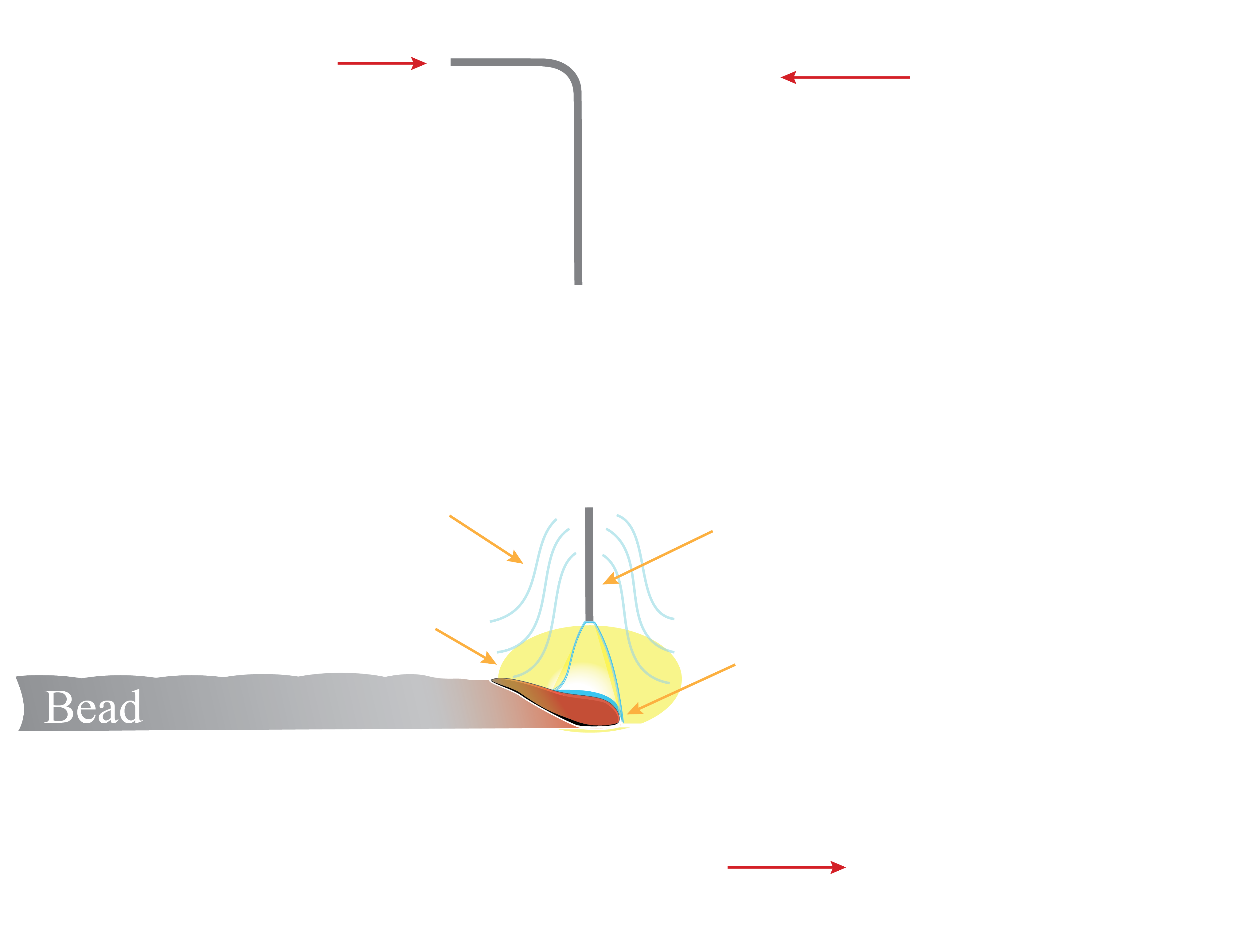
This chapter introduces WAAM as a large-scale metal additive manufacturing process and establishes the importance of thermal history in governing melt pool behavior, solidification, microstructure, and resulting mechanical properties.
2. Optimizing Camera Parameters for Two-Color Thermography
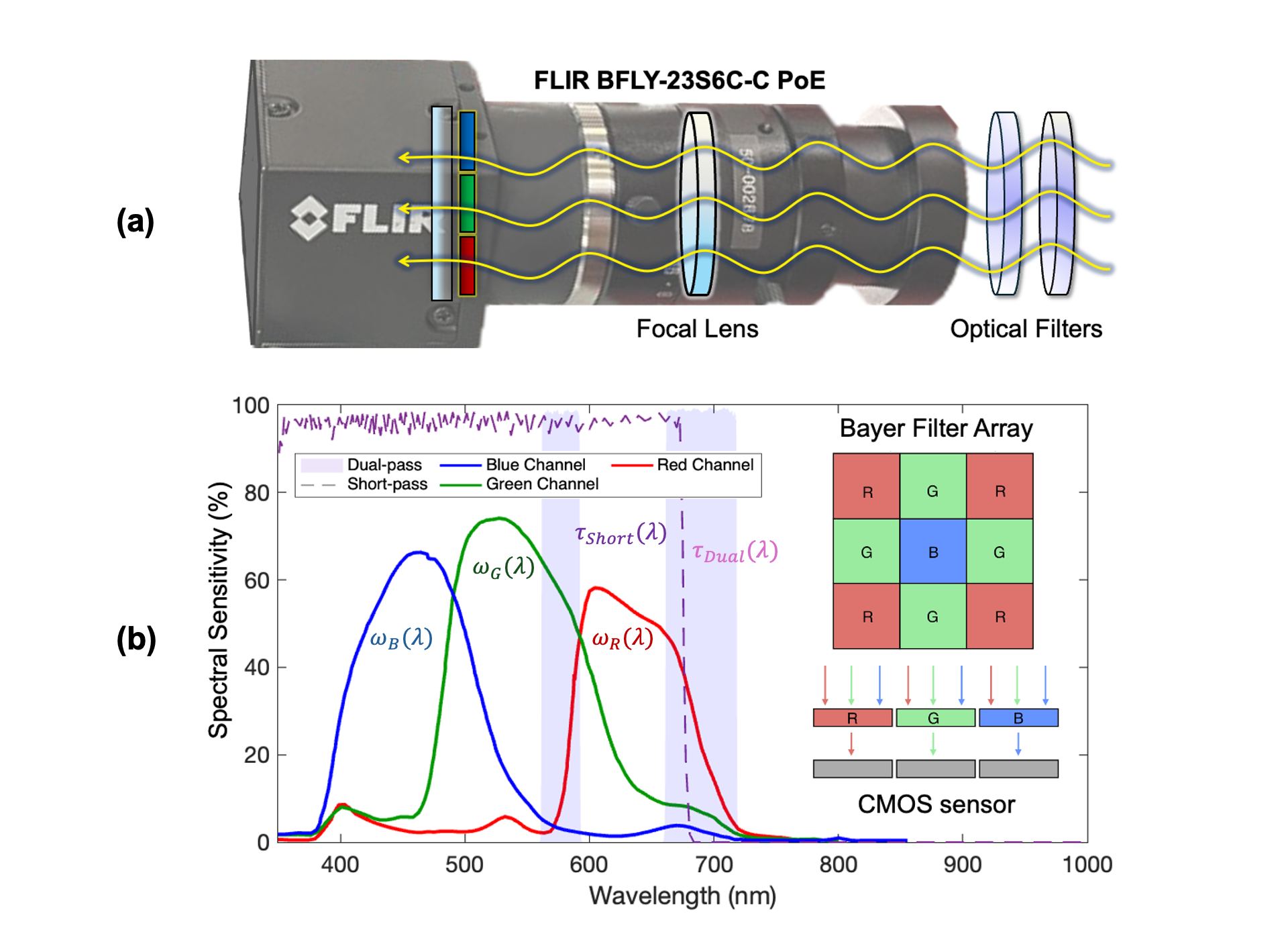
This chapter develops the experimental framework needed for reliable two-color measurements with a commercial color camera, including calibration, exposure selection, and strategies to reduce arc and plasma interference during welding.
3. Two-Color Thermography of L-59 Low-Carbon Steel
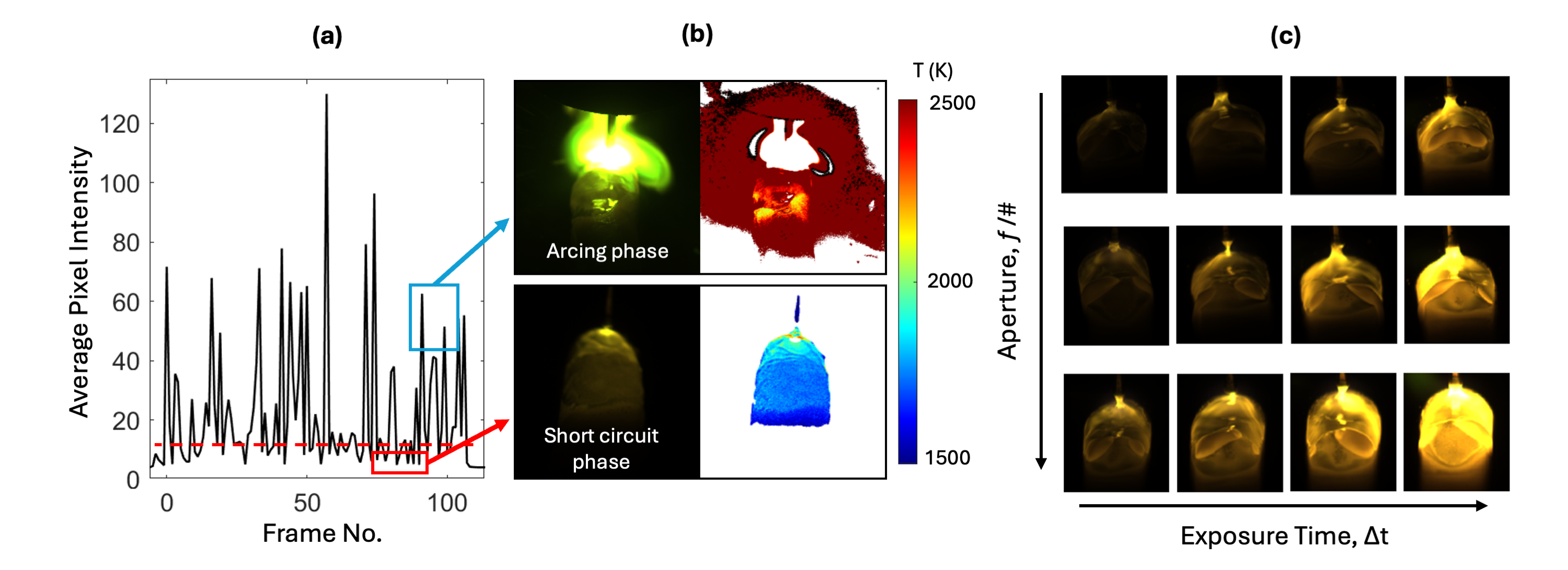
This work demonstrates that two-color thermography can recover meaningful thermal metrics during gas metal arc welding of low-carbon steel. These measurements are then linked to cooling behavior and hardness, showing how one sensing input can produce multiple outputs relevant to process monitoring.
4. Two-Color Thermography of Cold-Metal Transfer Alloy 718
This chapter extends the framework to multi-layer Alloy 718 WAAM builds, where interlayer dwell time, thermal accumulation, cooling rate, and melt pool evolution are studied together. The goal is to better understand how thermography can support process control in more complex deposition conditions.
5. Multi-Spectral Thermography for Aluminum Alloy Welding
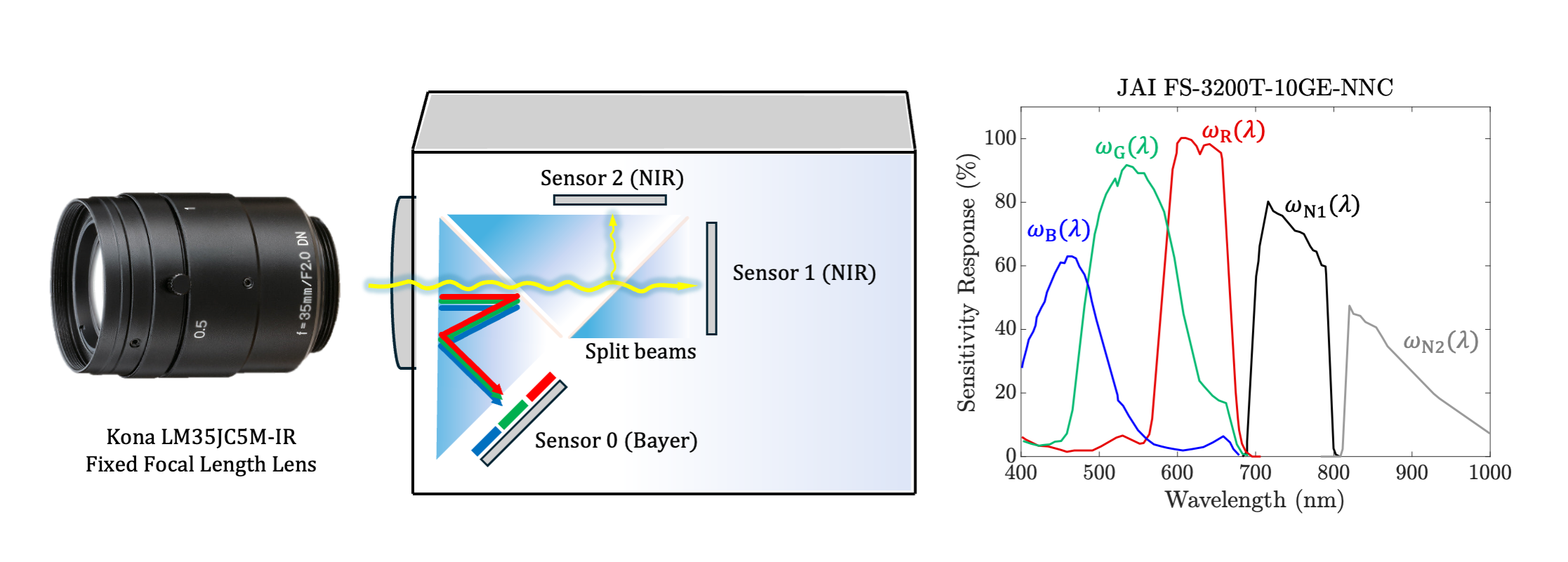
The final chapter explores broader multi-spectral imaging approaches for aluminum alloy welding, where optical behavior can be more challenging. This work investigates how richer spectral measurements may further expand the number of process outputs available from a compact sensing setup.
If you'd like to see a copy of my ongoing dissertation proposal, feel free to reach out!
Contact MePublications, Talks & Presentations
Peer-Reviewed Publications
- G.C. Solis, A.J. Myers, G. Quirarte, B. Mondal, J.A. Malen, S.P. Narra, “Two-Color Thermography of GMAW to Enable Real-Time Hardness Prediction,” Welding Journal Research Supplement 104 (2025) 351-s–365-s.
Manuscripts in Preparation
- G.C. Solis, I. Lu, D. Duquette, J.A. Malen, S.P. Narra, “Layer-Resolved Thermal History of As-Deposited WAAM Alloy 718 Using Two-Color Thermography.” Manuscript in preparation.
Conference & Invited Talks
- Solis, G. (2025). “Two-Color Thermography of Gas Metal Arc Welding to Enable Real-Time Hardness Prediction.” Advanced Manufacturing Research and Education in MechE (Sneha Prabha Narra & Gala Solis), MechE Council Meeting, Mill 19, Hazelwood, PA (held via Zoom).
- Solis, G. (2024). “Melt Pool Thermal Imaging on Wire-Arc Additive Manufacturing Using the Two-Color Method with a Commercial Color Camera.” Materials Science & Technology (MS&T24), Pittsburgh, PA.
- Solis, G. (2023). “Thermal Imaging for Wire Arc Additive Manufacturing Using an Off-the-shelf Color Camera.” Solid Freeform Fabrication Symposium (SFF), Austin, TX.
Posters, Seminars & Academic Presentations
- Solis, G. (2026). “Thermal History to Property Mapping of Wire-Arc Additive Manufacturing Using Two-Color Thermography.” Mechanical Engineering PhD Symposium, Carnegie Mellon University. Best Technical Poster Award, Advanced Manufacturing category.
- Solis, G. (2025). “Two-Color Thermography of Gas Metal Arc Welding to Enable Real-Time Hardness Prediction.” NextManufacturing Lunch & Learn Seminar Series, Carnegie Mellon University.
Dissertation Proposal
- Solis, G. (2025). “Real-Time Melt Pool Monitoring Using Two-Color Thermal Imaging of Welding-Based Additive Manufacturing.” Dissertation proposal presentation, Carnegie Mellon University, Pittsburgh, PA.